Can AAP be revived in Punjab after massive win in Delhi, space contiues to exist for third alternative
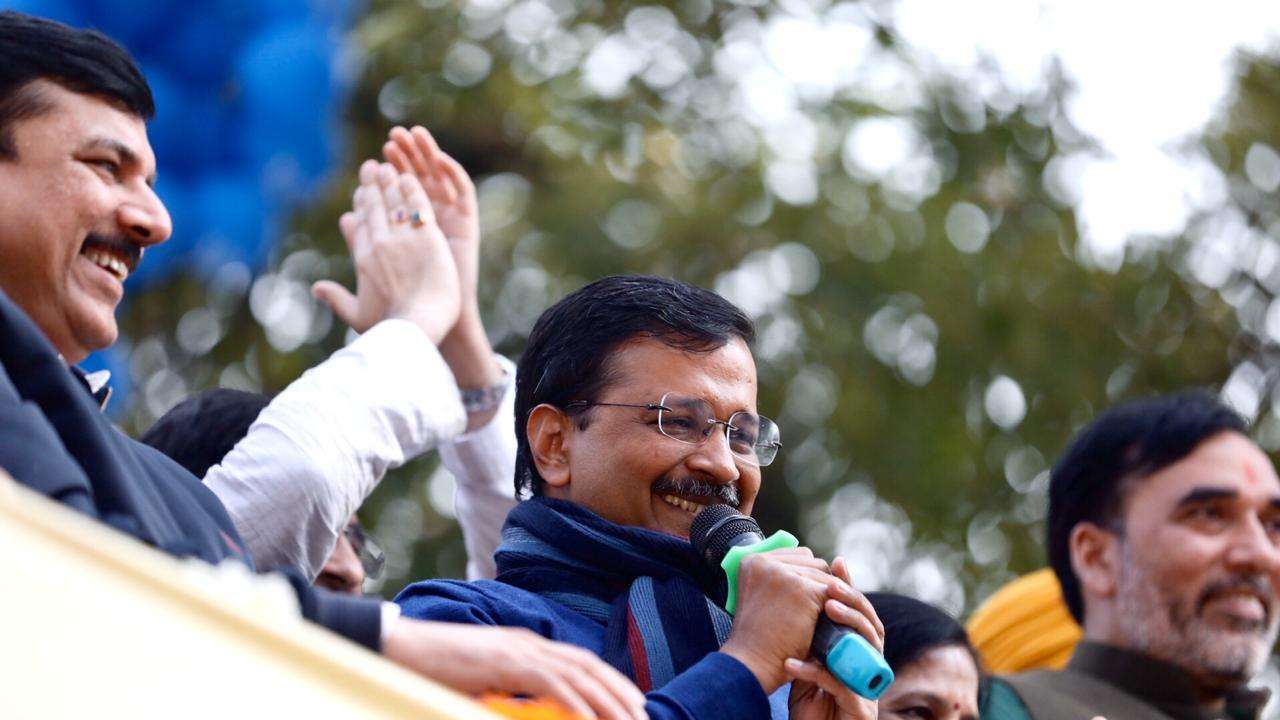
The spectacular victory of the Aam Aadmi Party in Delhi has
triggered the speculations about its likely impact in Punjab where the party
had debuted in 2014 Lok Sabha elections by electing four MPs. The party seemed
to be forming the government in this border state in the run up to the 2017
Assembly elections but fell victim to the machinations and wily politics of its
over-ambitious and opportunist leaders, besides tactical blunders.
The party managed to occupy the space of the main opposition
replacing the grand old Akali Dal but then committed harakari.
The likely impact of the Delhi victory would be known in the
coming days.
However, the Punjab political discourse is completely
different from that in Delhi where AAP managed to turn the fight
non-ideological in the face of massive onslaught by the Bharatiya Janata Party
that gave priority to its divisive and hate agenda.
The AAP managed to wipe out the Hindutva brigade at the time
when the Modi government has been aggressively continuing with its majoritarian
agenda. Its hate campaign was also designed accordingly. Arvind Kejriwal
refused to fight on BJP turf and stuck to his own agenda.
Kejiwal managed to introduce non-ideological campaign while
projecting himself as Hindu family man committed to his agenda of his
development that was backed by his performance during the last two years of his
government. The Modi government at the centre has been under attack for
mismanaging the economy and diverting the attention from issues concerning
daily life of the people. The majoritarian discourse is threat to the edifice
of democracy itself.
The likely impact of the Delhi polls on Punjab has to be
seen in this framework of the fight in which the Congress did not matter at
all.
The issue is whether Kejriwal would now take clear stand on
issues that he side-stepped during the elections? He might have to in case the
party has to expand its footprint outside Delhi. Punjab continues to be the
fertile ground despite its failings.
There is little sign of the Congress government in the state
improving its performance. This is a remote-controlled government that otherwise
is on contract. The end result is non-governance. Dissatisfaction can be gauged
everywhere and in every section; one has just to talk to the people at the
grassroots.
The Akali Dal has only now started showing some signs of
coming into action but has been hit hard by revolt. The albatross of Bargari
sacrilege that continues to hang around the neck of the Shiromani Akali Dal is
a separate issue. Capt Amarinder Singh might use it strategically at the
appropriate time against Akali Dal president Sukhbir Singh Badal. His father
Parkash Singh Badal was the chief minister in 2015 when the incidents relating
to sacrilege of Guru Granth Sahib took place. Sukhbir was the deputy chief
minister.
More than the sacrilege, it is the way the Badals confronted
those seeking justice that angered the Sikhs. As the Sikhs came out on roads,
the Badals decided to confront the protesters by organising party conferences.
The Badals resorted to the same strategy when the Sikh organisations launched
indefinite dharna in 2018 at Bargari demanding action against culprits from Capt
Amarinder Singh government.
It is for this reason that the space for third alternative
continues to exist in Punjab.
The political discourse in Punjab is different from rest of
the states in India. This is the state that is dominated by the Sikhs who are a
second biggest minority in the country after Muslims. The Sikh institutions are
an important dimension of this discourse.
Punjab has a long history of struggles, both before and after partition
of India in 1947.
Arvind Kejriwal had a very bitter experience in Punjab
during election campaign when he stayed just for one night at a house that
belonged to a former militant. The Hindu support base of AAP distanced from the
party.
One of the main issues in Punjab is the lack of an effective
leader whom the people can trust. There is none in the party at present.
The people in Punjab continue to wait for that Deliverer. This has been a long wait.
Comments
Post a Comment