Should not minority dominated Punjab lead struggle against CAA and NRC? Sikhs were the victims in 1984.
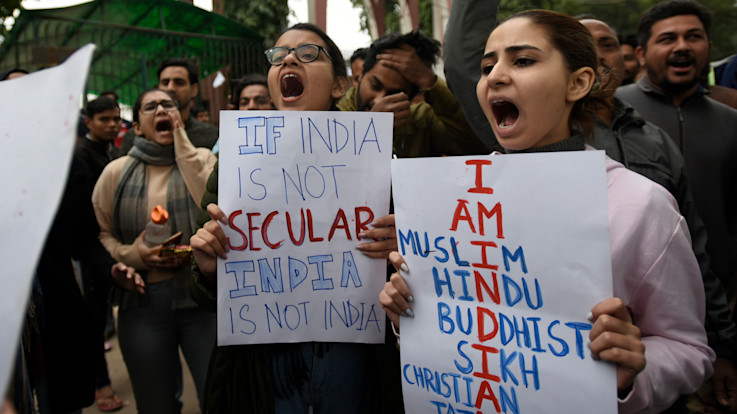
Chandigarh: Lashing out at Union Law Minister
Ravi Shankar Prasad, Punjab Chief Minister Capt Amarinder Singh has rightly
defended the resolution passed by the Kerala Assembly rejecting the CAA. Punjab
must do more. Punjab being the only state in the country dominated by the second
biggest and assertive minority should
lead the struggle against discriminatory Citizenship (Amendment) Act. The Sikhs
were the victims in 1984.
He said Friday “The Kerala
Assembly’s resolution represented the will and wisdom of the people as spoken
through their elected representatives…Surely (and again as a lawyer yourself)
you would be alive to the raging debate that the CAA fails the test of Article
14 of the Constitution of India, which guarantees to all persons equality
before law and equal protection of laws, irrespective of their religion… If the
CAA seeks to protect religious persecution, then such protection should be
available to persons of all religious minorities, from all countries where
people may face religious persecution”.
Punjab is the only state in the
country that is dominated by a minority, the Sikhs in this case. It is
precisely of this reason that its political discourse is different from the
rest of the country.
Shiromani Akali Dal, the political
party that was formed to protect the interests of the Sikhs 99 years ago, articulated
the minority rights for decades till it opted for alliance with the Bharatiya Janata
Party in 1996. The alliance continues. This party, going against its glorious
history, supported the citizenship bill. Party president Sukhbir Singh Badal
who is also member of the Lok Sabha has been demanding end to discrimination on
religious basis but this stand is meaningless after supporting the legislation.
Moreover, the entire Akali discourse is now questionable.
It is not just that of Punjab being
dominated by a national minority. It is
pertinent to mention that Punjab played pioneering role in the freedom struggle
of the country. It is a different matter that this role has not been given due
recognition at the national level.
It is now the struggle against
forces of sectarianism and communalism that are dragging the country back to
1947.
The Punjabis were the worst
victims of the communal politics that resulted in the partition of the country
in 1947 that resulted in the creation of Pakistan. This partition was mainly of
Punjab and Bengal. The partition impacted millions of Punjabis with more than a
million having been killed. It is for this reason that Punjab should lead the
fight against communalism.
The Sikhs as a community became
suspects when Punjab was hit by militancy.
The Sikhs passing through Haryana were insulted and humiliated while
passing through Haryana during Asian games in 1982. Then there was Operation
Bluestar, the brutal army attack on the Golden Temple (Darbar Sahib) in June 1984.
The Sikh religion preaches love
and universal brotherhood, the philosophy that is symbolised by the Golden
Temple. The institution of Langar is universal brotherhood in practice.
Secular forces have united against
bigotry all over the country and this struggle must be taken to the logical
conclusion to save basic character of the Constitution that is under threat.
Capt Amarinder Singh is among the
first chief ministers who took a stand against CAA.
He should now convene special
session of the state Assembly to get the resolution passed against the CAA.
Such a resolution would also be
the test for the Akali Dal.
At the time when India should have been competing with
China, the country is being dragged down by communal political discourse. This discourse
is anti-people and must be opposed.
And Punjab should take the lead.
Comments
Post a Comment