Jagtar Singh
Chandigarh: The basic issues are getting lost in the blame
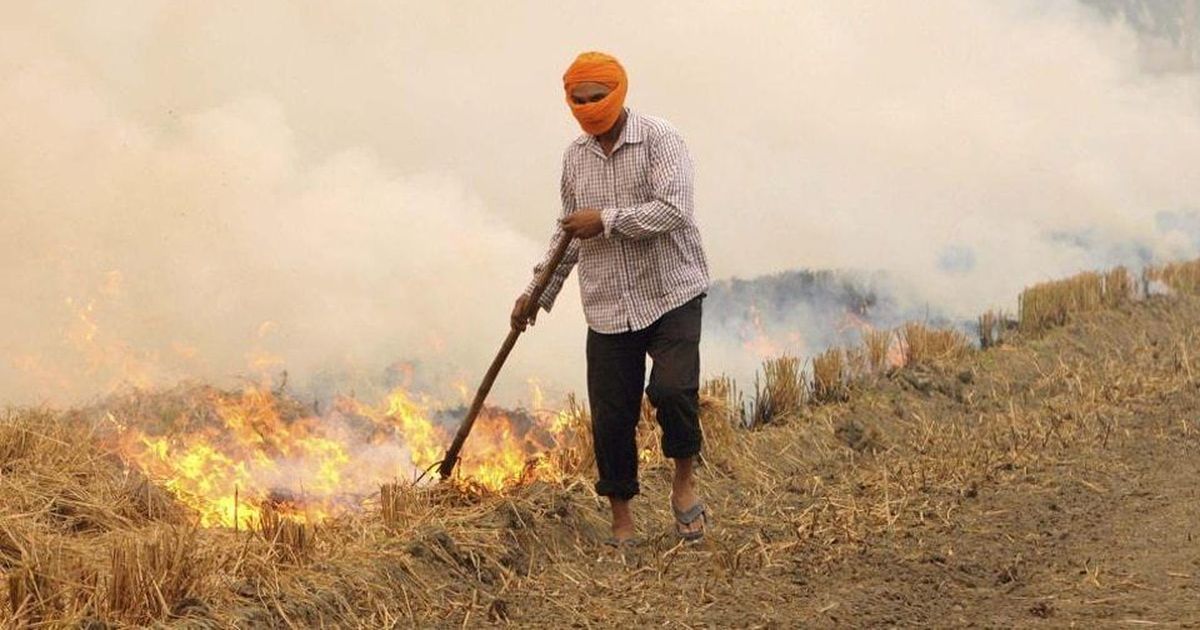
game and the debate on stubble burning by paddy farmers in Punjab and Haryana
in the context of Delhi turning into gas chamber every year during the
post-paddy harvesting period.
A farmer summed up the issue while addressing the gathering
sometime back at the kisan mela that is organised by the Punjab Agricultural
University at Ludhiana.
Posing the problem, he said, “Why you people can’t
understand that the very first victims of the stubble burning are we and our
children living in the villages? Are we fond of this smoke or have turned
immune to the problem?” None had the answer. He also pointed out the problems
with the scheme introduce by the Punjab government to subsidise the machinery
to deal with stubble.
The basic issue, however, is not just stubble burning. This
is a by-product of mechanised paddy harvesting. This has been going on in
Punjab ever since paddy cultivation was introduced under Green Revolution to
make India self-sufficient on food grains. From a deficit state, India is now a
food surplus country. India would need more production to feed the rising
population going by the projections.
Paddy was never the crop grown in Punjab but for Basmati in
some pockets and moreover, is was not rice consuming state. The farmers in
Punjab did not know how to cultivate paddy and labour had to be brought from
other states.
Punjab’s agriculture is highly intensive under two crop
pattern. Some farmers even grow three crops. There is little time after paddy
harvesting to prepare the soil for wheat. So long as there was manual
harvesting, stubble was not much an issue.
With the mechanised
farming having taken over completely in Punjab, the problem of stubble burning
has assumed alarming proportions. The problem can be dealt with by introducing
more machinery and that is what the government is already persuading the
farmers to go in for. But at what cost? Who should bear this additional cost of feeding the nation? The incidence of
farmers committing suicides in this agriculturally the most advanced state is
high.
The country has to answer the basic question raised by the
farmer at Ludhiana and that is why he is forced to expose his children to this
problem and that too where its impact is the worst?
Stubble burning alone is not the issue related to food
sovereignty. Punjab’s soil has turned toxic. Excessive dependence on tubewell
irrigation is drastically drying up the ground water sources. It is ironic that
70 per cent of the water from Punjab’s three rivers is flowing out to Haryana
and Rajasthan. Some water is flowing down to Pakistan as the canal system in
the state is choked.
Punjab situation can better be understood by marketing
system. The mandi system in Punjab is the most developed and the main
procurement is done by the public sector agencies. The procurement season lasts
one month. The farmer has to meet the specification to get full support price.
Nowhere in the world such huge quantity of food grains is brought to the brought in such proportionate area and that
too within a month. This indicates the enormity of problems associated with
farm operations of which stubble burning is just one aspect.
Punjab is already over-mechanised. It is the government that
has to come out with acceptable
solutions. There are social issues too
associated with mechanisation. Punjab needs comprehensible policy to
deal with the farm sector.
Are stubble fires the
only reason for Delhi turning into gas chamber?
Chandigarh sky was affected by haze only on Saturday, days
after Delhi? How come that the smoke from Punjab fields bypassed Chandigarh?
At the broader level, the nation must pay the cost of food
sovereignty to the farmers. The only people who presently make money are the
middlemen and the officials handling food grains.
Rather than taking the plea of not guilty, Punjab should press
for subsidy as compensation for turning the country food sovereign. The minimum
support price mechanism does not cover all aspects.
Comments
Post a Comment